Top Tips for Balancing Speed and Safety in Delivery Services


You might know that it is hard to balance speed and safety in delivery, especially when sending packages to other countries. Customers want their packages fast, and waiting too long can make them upset or leave bad reviews. Delivery drivers must watch out for traffic and weather changes to keep everyone safe. Fishgoo tries its best to give you quick and dependable service, so your packages get there safely every time. Think about how you handle your own deliveries. Are there things you can do to make your routine better?
Key Takeaways
Plan your delivery route with care. This helps you save time. It also keeps you safe. Use data to pick the best way. Stay updated on traffic and weather.
Always check your vehicle before you start. This easy step can stop accidents. It can also prevent expensive breakdowns. It keeps you and others safe.
Follow speed limits every time you drive. This lowers the chance of accidents. Even slowing down a little helps a lot. It can make crash rates much lower.
Practice defensive driving by staying alert. Avoid things that distract you. This habit helps you react fast. You can handle surprises on the road.
Take breaks often to avoid getting tired or stressed. Resting helps you stay focused. It also keeps you safe while you deliver packages.
Route Planning for Speed and Safety
When you want your delivery to be fast and safe, planning is everything. Fishgoo makes this easier by letting you submit a product link, combine items in the warehouse, and pick the best shipping route. This smooth process helps you get your package quickly and keeps it safe from start to finish.
Pre-Trip Vehicle Checks
Before you hit the road, you should always check your vehicle. A quick inspection can save you from big problems later. Take a look at the table below to see how these checks help you stay safe:
What You Do During Checks | How It Helps You Stay Safe |
|---|---|
Look for mechanical issues | Stops breakdowns and accidents |
Check safety features like brakes and lights | Makes driving safer for you and others |
Keep records of inspections | Shows you care about safety and helps with claims |
Follow legal rules for inspections | Avoids fines and keeps you on the right side |
Spot problems early | Saves money and trouble down the road |
If you skip these steps, you risk accidents and extra costs. So, make pre-trip checks part of your routine.
Route Optimization
You want to plan your route so you can deliver faster and safer. Here are some smart ways to do it:
Use good data to pick the best path.
Think about distance, time, and stops.
Ask drivers for tips about local roads.
Change your route if traffic or weather gets bad.
Keep in touch with your team for updates.
Watch live traffic to avoid slowdowns.
Change your route if the weather turns bad.
Add last-minute orders without messing up your plan.
When you optimize your route, you save time, money, and fuel. You also help the environment by driving less.
Weather and Traffic Monitoring
Bad weather and traffic jams can slow you down or make driving risky. Real-time monitoring helps you spot problems early. Here’s why it matters:
You see accidents or hazards right away.
You get alerts about storms or heavy rain.
You avoid traffic jams and keep moving.
You use smart tools that show you the best way to go.
With these tips, you can deliver packages quickly and safely, no matter what the road throws at you.
Speed and Safety Management
You want to deliver packages fast. But you must keep everyone safe too. Speed and safety are both important for delivery drivers. If you go too fast, you might crash. If you drive too slow, customers get upset. Let’s see how you can do both.
Following Speed Limits
Speed limits help keep you and others safe. When you follow the speed signs, you lower accident risks. Here’s what happens when you obey speed limits:
There are fewer crashes and injuries.
Even slowing down a little helps a lot. Dropping your speed by 1 km/h can lower accidents by 5%.
Driving too fast means you might miss blind spots or sudden stops. Always slow down in busy places and work zones. Getting there safe is better than being early.
Tip: Look for speed signs, especially in new places. If you don’t know the limit, slow down. It’s safer to arrive late than not at all.
Defensive Driving
Defensive driving means you watch out for surprises. You look for other cars, people, and bikes. You check your mirrors and keep your eyes moving. Here are some good defensive driving habits:
Stay far enough behind the car in front. Six seconds is a good space.
Check your blind spots before you change lanes.
Don’t get distracted. Don’t use your phone or eat while driving.
Plan your route so you know where to go.
Use your signals so others know what you’ll do.
Check your vehicle before each trip. A safe car helps you stay safe.
Doing these things lowers your chance of crashing. You help make the roads safer for everyone.
Note: Drivers who pay attention and avoid distractions crash less. Defensive driving is the best way to stay safe.
Managing Fatigue and Stress
Long hours and tight schedules can make you tired. Being tired makes it hard to focus and react fast. Stress can make you take risks you shouldn’t. Many delivery drivers feel pressure to keep going, even when tired. Here’s how being tired and stressed affects safety:
Factor | Impact on Drivers |
|---|---|
Insufficient Sleep | Slower reactions, bad choices, less awareness |
Long Work Hours | More crashes from being tired |
Economic Pressures | More stress, which can lead to unsafe driving |
Almost three out of four drivers say their schedules are too tight. About one out of four keep driving even when tired. Fatigue causes up to 40% of serious truck crashes. If you feel tired, take a break. Resting helps you stay alert and safe.
Tip: Plan breaks in your day. Drink water, stretch, and rest when you need to. Your safety is most important.
Value-Added Services for Safe, Efficient Delivery
Fishgoo gives you extra services to help you deliver safely and quickly. Reinforced packaging keeps your items safe from damage. Quality control checks make sure products are good before shipping. Customized solutions let you pick what works best for you.
Value-Added Service | Description |
|---|---|
Reinforced Packaging | Extra protection for your package, less damage and more safety |
Quality Control | Checks products before shipping, fewer returns and better efficiency |
Customized Solutions | Services made for your delivery needs, making things easier |
Using these services keeps packages safe and customers happy. Your job gets easier and faster too.
Note: Drivers who use reinforced packaging and quality control have fewer damaged packages and happier customers.
If you follow speed limits, drive defensively, and take breaks, you stay safe and keep deliveries on time. Fishgoo’s extra services give you peace of mind, so you can focus on speed and safety.
Delivery Driver Safety Tips
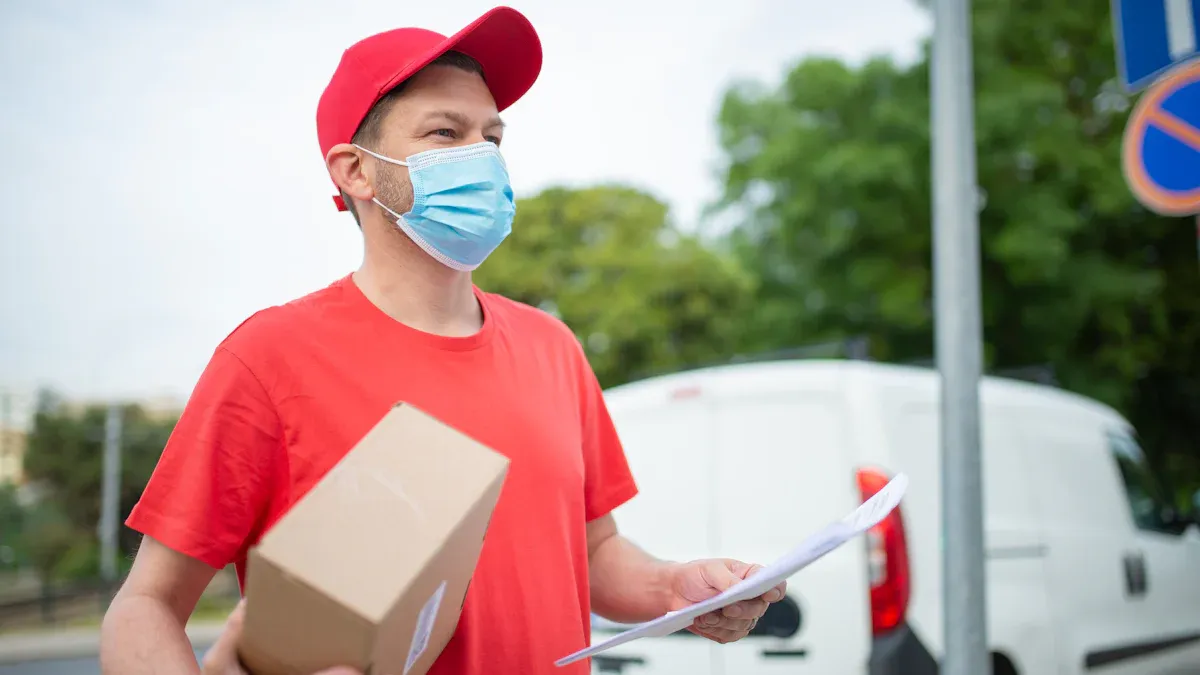
You need to keep yourself and others safe when you deliver. These delivery driver safety tips help you avoid accidents and protect your cargo. Let’s see some simple habits and safety protocols you can use every day.
Seatbelt and Safety Gear
Always wear your seatbelt before you drive. Seatbelts save lives and stop serious injuries. If you need extra gear, like a vest or gloves, put them on. Safety gear helps you stay seen and protected. This is important at night or in busy places.
Tip: Check your seatbelt every time you drive. Remind others to buckle up too. Safety begins with you.
Situational Awareness
You must pay attention to everything around you. Spot hazards before they become problems. Situational awareness training helps you stay alert. You notice brake lights, people, and bikes early. You watch other drivers and avoid sudden moves. You change your driving for rain or fog. You react calmly to surprises.
Always look for children near driveways and schools. Slow down when you cannot see well. Yield to people at crosswalks. Keep space from bikes. Never drive after drinking or using drugs. Be careful at intersections and know who goes first. When you back up, check for people behind your vehicle.
Note: Staying alert helps you avoid accidents and keeps everyone safe.
Safe Parking and Emergency Procedures
Park in safe, bright places away from heavy traffic. Look for people and bikes before you open your door. If there is an emergency, follow these steps:
Warn people nearby, like workers or bystanders.
Move to a safe spot, upwind if there is a spill.
Turn on alarms if needed.
Tell the right person in charge, like an Incident Commander.
Every workplace has its own risks. Know the layout, equipment, and any dangerous materials. A site-specific emergency plan helps you act fast and stay safe.
Safety Protocols for Parking and Emergencies | Why They Matter |
|---|---|
Park in safe, visible areas | Stops theft or accidents |
Check surroundings before exiting | Protects people and cyclists |
Follow emergency steps | Keeps you and others safe |
Know your workplace risks | Prepares you for real emergencies |
Break Recommendations
Take regular breaks to rest your body and mind. Short breaks help you recover and stay focused. Stretch or walk during your break. Fresh air and movement help you feel better. Do not drink too much caffeine, it can make you tired later.
Regular breaks lower fatigue and help you react faster.
Micro breaks help you focus during long shifts.
Light stretching boosts your alertness.
Early starts and long hours make breaks more important.
Tip: Plan your breaks ahead. Use breaks for rest and movement, not just sitting. Staying alert keeps you safe and helps you deliver on time.
Protecting Your Parcels: QC Photos and Insurance
You want your packages to arrive safely. Fishgoo helps with quality control photos and insurance. Before shipping, photos show the item’s condition. These photos help with damage claims if something happens. Insurance gives you money back if your package is lost, stolen, or damaged. Insurance is important for fragile or expensive items.
QC photos show the item’s condition before shipping.
Insurance covers damage, loss, or theft.
Fragile items get extra protection with insurance.
Note: Using QC photos and insurance keeps your parcels safe and gives you peace of mind.
By following these delivery driver safety tips, you protect yourself, your packages, and everyone around you. Good safety habits, regular breaks, and smart emergency plans make every delivery safer and smoother.
Technology for Driver Safety
Technology helps delivery drivers work better and safer. New tools come out every year. These tools help you avoid problems and deliver on time. Fishgoo’s online platform gives you tracking and quick updates. You can get help from customer support fast. You always know where your package is. If something changes, you can make good choices.
Navigation and Route Apps
You do not need to guess the best way to go. Navigation apps like Logistia Route Planner, Waze, and Route Planner App help you find safe and fast routes. These apps show live traffic and give voice directions. You also get tips from other drivers. This saves you time and helps you avoid being late.
App Name | Key Features | Benefits for Delivery Drivers |
|---|---|---|
Logistia Route Planner | Route optimization, communication tools, financial management | Enhances efficiency and supports business functions |
Waze | Community updates, real-time traffic, voice navigation | Reduces delays and promotes safety |
Route Planner App | Driver log books, compliance tracking, reporting | Ensures safety compliance and reduces stress |
Using route planner apps helps you know when you will arrive. This builds trust with your customers.
Real-time traffic updates help you skip traffic jams.
Voice directions let you keep both hands on the wheel, making driving safer.
Dashcams and Monitoring Tools
Dashcams are like extra eyes for you. They record your trips and help you pay attention. You get reminders to keep your hands on the wheel. Dashcams help with training and protect you if there is a crash.
Dashcams let you watch your trip and help you stay honest.
They help you find better ways to drive, saving time and gas.
Videos from dashcams make insurance claims faster and protect you from blame.
Dashcams now give tips and rewards for safe driving. This makes learning easier and more fun.
Real-Time Communication
You need to talk to your team fast, especially in emergencies. Real-time communication tools let you send alerts and updates quickly. If something goes wrong, you can tell your team right away. GPS shows your location, so help can find you fast.
Emergency alerts help you get help quickly.
Automatic trip updates help your team respond faster.
Telematics systems use GPS to show where you are.
Fast communication keeps you safe and helps you fix problems before they get worse.
Technology helps you balance speed and safety in delivery. You get smarter routes, better training, and quick support. Fishgoo’s platform gives you clear tracking and updates. You always know what is happening. With these tools, you deliver faster and safer every day.
Work Zones and Special Situations
Adapting Speed in Construction Zones
You face a lot of changes when you drive through construction zones. These areas can be confusing and stressful. You need to focus on the three Ss: speed, stress, and space. Slow down and watch for signs or flaggers. Give yourself extra room between your vehicle and others. Expect delays and stay patient. Work zones are temporary, but the risks are real. Many accidents happen here, so promoting work zone safety matters every day.
Here are some tips for safer trips in construction zones:
Talk to workers on site so you know where to go.
Secure your load before you enter the zone.
Look for hazards like uneven ground or power lines.
Plan your route to avoid busy spots.
Train yourself to spot dangers and follow safety rules.
Remember, trip planning takes a little more time, but it helps you avoid stress and keeps everyone safer.
Nighttime and Poor Weather Deliveries
Driving at night or in bad weather can make your job harder. Rain, snow, and fog slow you down and make roads slippery. You might not see hazards until it’s too late. Nighttime deliveries also mean less light and more risk.
What can you do?
Use route planning tools to skip areas with storms or heavy traffic.
Pick weatherproof packaging to protect your goods from rain or snow.
Take extra care with your speed and watch for sudden stops.
If you feel tired, pull over and rest.
Fishgoo offers flexible shipping options and insurance for these tough conditions. You can choose slower, eco-friendly delivery if you want to save money or help the planet. Insurance gives you peace of mind when the weather is bad.
High-Traffic and Urban Areas
Busy cities bring new challenges for delivery drivers. You deal with traffic jams, hard-to-find parking, and lots of people walking around. These things can slow you down and make your job stressful.
Here’s a table to help you handle city deliveries:
Challenge | Solution |
|---|---|
Traffic Congestion | Use GPS apps for real-time updates and faster routes. |
Parking Difficulties | Try micro-fulfillment centers for quicker drop-offs. |
Time Pressure | Plan your route to avoid rushing and missing stops. |
Safety and Security | Install dashcams and smart tech for extra protection. |
You can also use smart lockers for easy pickups and look into drone delivery programs. These tools help you work faster and safer.
When you plan ahead and use the right tools, you make every delivery smoother, even in busy places.
You can keep deliveries fast and safe with easy steps. First, plan your route and use tracking that updates in real time. Next, teach drivers good habits and give rewards for safe driving. Also, use technology and extra services to help your deliveries go well.
If you focus on safety, you keep your team and packages safe. Always remember to make speed and safety important every time you deliver, no matter the place.
FAQ
How can I track my package with Fishgoo?
You can log in to your Fishgoo account and check the "My Parcel" section. There, you will see your tracking number and the latest updates. If you need help, just contact customer support.
What should I do if my package gets delayed?
First, check your tracking info for updates. Sometimes, weather or customs can slow things down. If you still have questions, reach out to Fishgoo’s support team. They will help you find answers fast.
Does Fishgoo offer insurance for my delivery?
Yes! You can add insurance when you ship your parcel. Insurance protects your package from loss or damage. It is a smart choice, especially for valuable or fragile items.
How does Fishgoo keep my items safe during shipping?
Fishgoo offers value-added services like reinforced packaging, shockproof and waterproof options, and quality control photos. These services help protect your items from damage and give you peace of mind.
See Also
Maximizing Your International E-Commerce Logistics For Success
Key Global Shipping Solutions For Newcomers In 2025
Shopping Online From China: Safe And Effective Strategies
Easy Ways To Cut Shipping Costs By 40% On Pinduoduo
Navigating Online Shopping From China: Tips And Platforms For 2025