Smart Shipping Strategy: Tips for Managing Multiple Orders in Warehouse Storage

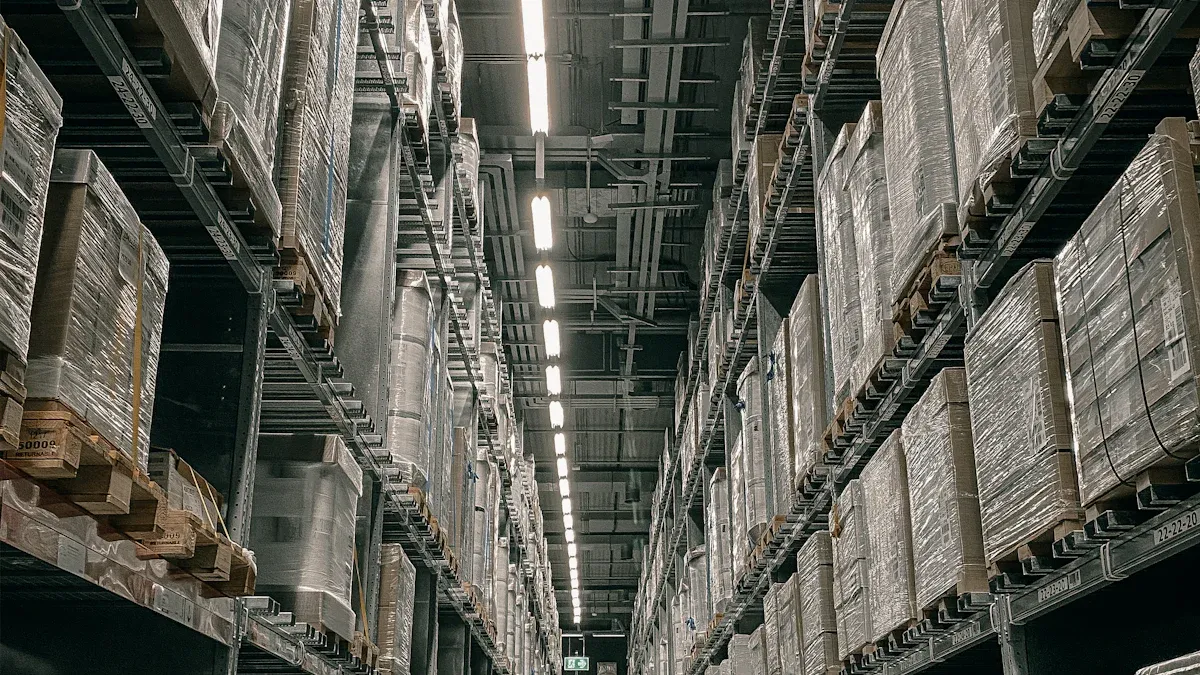
A smart shipping strategy makes it easy to handle many orders in warehouse storage. You can boost productivity by 200%. You can also reach 99.9% order accuracy with automation and clear steps. Fast and reliable shipping is important in cross-border e-commerce. Studies show that clear updates and correct details help build trust. Fishgoo’s one-stop service shows how smart shipping uses speed, accuracy, and order consolidation for a smooth process. Think about ways to make your own process better to meet global customer needs.
Key Takeaways
Use a smart shipping strategy to help your team work faster. This can make your team 200% more productive. You can also get 99.9% of orders right.
Make your warehouse better by setting up special areas. Have one area for receiving, one for storage, one for packing, and one for shipping. This helps everyone work better and faster.
Use technology and machines to make order processing easier. This can help you make fewer mistakes. It also helps you keep track of your inventory better.
Check the quality at every step of shipping. This helps you make sure orders are right. It also keeps your customers happy.
Think about using more than one warehouse. This puts products closer to your customers. It can help you deliver faster and save money.
Multi-Order Challenges
Common Issues
Handling many orders in a warehouse is tough. You have to watch each order and store items safely. You also need to keep things moving without problems. If you do not fix these issues, your warehouse can slow down and cost more money. Here is a table that lists the main problems you might face:
Challenge | Description |
|---|---|
Inefficiencies in space | Not using space well can block work and raise costs. |
Inventory management issues | Trouble tracking inventory can cause mistakes and slow orders. |
Order picking efficiency | Slow picking makes orders take longer and costs more. |
Product damage | Bad storage can break products and upset customers. |
High labor costs | Bad processes make work cost more money. |
Poor ergonomics | Bad workspace design makes workers tired and less productive. |
Scalability and flexibility | Hard to change when orders go up or down. |
You might see these problems too:
Orders are not always right, so returns go up.
Picking, packing, or shipping mistakes upset customers.
Lots of SKUs and tricky orders make mistakes happen more.
Inventory control is the biggest problem for most people. More than 62% of workers say it is their hardest job. If you deal with special inventory, like parts with serial numbers or items that need cold storage, it gets even harder.
Customer Impact
When your warehouse has problems, customers notice. If a package is late, almost half of shoppers may not buy again. Bad delivery can make most customers leave for good. One mistake in picking or packing can lose a new customer forever.
Note: If you do not ship on time, people stop trusting you. Customers want their orders fast, correct, and safe. Slow shipping is a big reason why people stop buying from you.
Your warehouse helps keep customers happy. If you make your warehouse better, you keep more customers and get a good name in shipping.
Warehouse Layout Optimization
Storage Zones
You can make your warehouse work better by splitting it into zones. Each zone does a different job. You might have a receiving zone, a storage zone, a packing zone, and a shipping zone. This setup keeps inventory neat and easy to find. Using tall shelves and racks saves floor space. Stack shelves as high as safety rules let you. Make aisles smaller in the racking area to fit more shelves. If you find empty spots and use them, you almost double your floor space. Good zones help you manage inventory and fill orders faster.
Tip: Think about growing in the future. Your warehouse should get bigger as your business grows.
Pathways
Pathways help workers move and pick inventory. Wide, clear paths let staff move fast and stay safe. Micro-zoning and cluster picking make work easier. These ways can cut mistakes by 35% and speed up orders by 20% when it is busy. If you keep similar items apart, you lower picking mistakes by 40%. Guided picking tools, like scan-to-verify and pick-to-light, give you 99.5% accuracy and make picking 30% faster. Good pathways help your warehouse run better and make inventory easier to manage.
Bottlenecks
Bottlenecks slow down warehouse work. Manual sorting takes up more than half of workers’ time and costs more money. Hard steps and unclear labels cause mistakes and slow things down. During busy times, small problems get bigger and upset customers. You can find bottlenecks by checking lead time, cycle time, and inventory levels. High inventory may mean storage or supply chain problems. To fix bottlenecks, use automation and data tools. Pick tools that fix your biggest delays and work with your current systems. This keeps your warehouse running well and helps you ship orders on time.
Benefit | Impact on Order Processing Speed |
|---|---|
Saves time when looking for items | |
Fewer mistakes | Lowers picking errors and wrong shipments |
Faster work | Helps fill orders quicker |
Steady order processing | Makes sure orders arrive on time and builds trust |
Better accuracy | Stops items from getting lost |
Warehouse Order Picking Methods
Picking the right warehouse order picking strategy helps your warehouse work faster. It also helps you make fewer mistakes. You should match the order picking method to your warehouse layout. Think about how many orders you have and what products you store. Each method has good points and works best in certain cases. Here are the main warehouse order picking strategies. These can help you pick items faster and make your order picking better.
Zone Picking
Zone picking means you split your warehouse into zones. You give each worker a zone. Workers only pick items from their own zone for every order. This works well in big warehouses with lots of products in different places. Workers do not walk far, so they save time. This helps you pick items faster and keeps things running smoothly.
Benefit | Explanation |
|---|---|
Efficiency | Workers pick more and walk less. |
Specialization | Workers know their zones, so they make fewer mistakes. |
Scalability | You can handle more orders when you get busy. |
Reduced congestion | Fewer people move around, so the warehouse stays neat. |
Zone picking lets workers focus on a small area. You see less crowding and faster picking, especially with lots of orders. This strategy also helps you handle more orders when your warehouse gets busy.
Tip: Use zone picking if you have many SKUs in different spots. You will pick faster and make fewer mistakes.
Batch Picking
Batch picking means you pick items for several orders at once. You group orders into batches and pick all the items in one trip. This works best when many orders have the same items. You save time because you walk less in the warehouse.
Advantages of Batch Picking | Disadvantages of Batch Picking |
|---|---|
More efficient | Workers may get tired later in shifts |
Less walking for pickers | You need to sort items after picking |
Good for lots of orders | Planning and software can be tricky |
Sorting is needed after picking |
Batch picking helps you fill more orders quickly. But you must sort items after picking, which takes extra time. Workers need good training to avoid mistakes. If you have many different products, batch picking can be confusing.
Mixing many products in batches can cause mistakes.
Training workers well helps manage orders.
Inventory mistakes can slow down picking.
Batch picking is cheap for low order numbers. For medium numbers, your warehouse layout matters most.
Wave Picking
Wave picking means you pick orders in planned waves. You plan waves by shipping times or delivery deadlines. Workers pick items for many orders at once during each wave. This helps you match picking with packing and shipping, so you ship on time.
Wave picking groups orders by shipping time, so you ship on schedule.
You pick many orders at once, which makes picking faster.
You plan waves by delivery times, so orders are ready when needed.
Wave picking works well in warehouses that ship many orders at set times. You keep things organized and make sure orders leave on time.
Hybrid Methods
Hybrid warehouse order picking uses two or more strategies. You might mix zone picking with batch or wave picking. This helps you handle tricky orders and different products. Hybrid methods let you change your picking style to fit your needs.
Zone-wave picking: Pickers get all SKUs in their zone for all orders at once.
Zone-batch picking: Pickers gather all SKUs for a batch of orders in their zone.
Zone-batch-wave picking: Pickers collect many SKUs at once with different schedules.
Hybrid picking helps you adjust to new order types and SKU speeds. You can use automation and picking tools to make picking faster and more accurate. This is important for warehouses with many kinds of orders and lots of picking.
Note: The best warehouse order picking method depends on your warehouse size, order numbers, and product mix. Try different ways to see what works best.
Batch picking is good for medium to high order numbers but can cause crowding.
Zone picking works better for high numbers, especially with many pickers.
For low numbers, batch picking saves money. For high numbers, zone picking is usually better.
If you pick the right warehouse order picking strategy, you work faster and make fewer mistakes. Automation and smart planning help you get the most from your warehouse order picking process.
Smart Shipping Strategy Essentials
Technology Use
You can make your warehouse better with technology. Inventory management tools help you keep track of every order. These tools help you know when to order more products. They also help you not run out of things. Compliance management systems help you follow rules in every country. Logistics management systems let you see where orders are and pick the best routes.
Here is a table that shows how different technologies help your warehouse:
Technology Type | Benefits |
|---|---|
Advanced Inventory Management Tools | Optimize inventory levels, demand forecasting, stock replenishment, and inventory tracking. |
Compliance Management Systems | Ensure adherence to regulations across borders. |
Logistics Management Systems | Provide real-time tracking and route optimization for efficient order fulfillment. |
A warehouse management system (WMS) can help a lot. For example, Material Bank made fewer mistakes and worked faster after using WMS. Sprouts found more items and picked orders better in just six months. Barcode scanning and digital dashboards help you find and pack items quickly. Fishgoo’s quality inspection service checks every order before shipping, so customers get what they want.
Tip: Use technology to track orders, manage inventory, and ship on time. This helps your warehouse work well and stops mistakes.
Automation
Smart automation changes how you run your warehouse. You can use robots, conveyor belts, and sorting systems to move and pack products. Automation helps you fill orders faster and handle more orders each day. You do not have to worry if workers get tired or busy.
Here is a table that shows the benefits of automation in warehouse shipping:
Benefit | Description |
|---|---|
Faster fulfillment and shipping | Automation speeds up the process of order fulfillment and shipping, leading to quicker delivery times. |
Higher daily order output | Automated systems can handle more orders per day compared to manual processes. |
Consistent performance | Automation ensures that performance remains steady, regardless of labor variability. |
Reduced processing time | Streamlining tasks and data flow leads to significant reductions in processing time. |
Maximized space utilization | Automation allows for better use of warehouse space, increasing storage capacity without expansion. |
Enhanced scalability | Automation provides flexibility to scale operations quickly in response to demand fluctuations. |
Improved inventory management | Real-time tracking and reduced manual entry enhance inventory accuracy and control. |
Enhanced worker safety | Automation reduces physical risks by taking over hazardous tasks, improving workplace safety. |
Cost savings | Long-term savings from reduced labor costs and improved efficiency. |
Improved customer experience | Faster and more accurate order fulfillment enhances customer satisfaction and loyalty. |
Competitive advantage | Automation provides a strategic edge in meeting customer expectations and operational efficiency. |
You can use automation to pack and ship orders with less work. Packing machines measure, weigh, and seal boxes. Robots move items to packing stations. Label printers make sure every box has the right label. These tools help you ship faster and make fewer mistakes. Automation also helps you use your space better, so you can store more products.
Note: Smart automation lets you ship more orders when it gets busy. You do not need to hire more workers to keep up.
Quality Checks
Quality checks are important for smart shipping. You need to check every order at each step to make sure it is right. Quality checks help you find mistakes before they reach customers. Fishgoo’s quality inspection service is a good example. They check for damage, count items, and make sure the order is correct.
Here is a table that shows what to check at each step:
Checkpoint | What to Check | Why It Matters |
|---|---|---|
Receiving | Product condition, correct quantities, matching SKUs, PO compliance | Prevents damaged or excess stock from entering inventory and causing downstream errors |
Putaway | Correct item-to-location match, label visibility, appropriate storage | Avoids misplaced stock, which leads to delays and picking errors |
Picking | SKU, quantity, order number match, item integrity | Reduces order inaccuracies and return-related costs |
Packing | Order match, packaging quality, branding, correct documents | Prevents damage in transit and improves the unboxing experience |
Shipping | Label accuracy, carrier selection, weight & dimensions, order confirmation | Reduces delivery errors, exceptions, and customer complaints |
You can use barcode scanning to check every box before shipping. This step makes sure you do not send the wrong order. You can also take pictures to show the condition of each box before it ships. These steps help you stop returns and keep customers happy.
Tip: Always check every box before you ship it. Quality checks help you stay accurate and work better.
Smart shipping uses technology, automation, and quality checks to help you do better. You can pack and ship more orders with fewer mistakes. You can also keep your warehouse neat and your customers happy. When you use automation and quality checks, you build trust and help your business grow around the world.
Packing Accuracy

Packing accuracy is very important in every warehouse. You must make sure each order goes to the right customer. If you focus on packing accuracy, customers are happier. You also get fewer returns.
Double-Check Process
You can lower mistakes by double-checking orders. When you check each order twice, you catch errors. You can also do random checks on some orders. These checks help you find problems before shipping. If you watch how workers do their jobs, you see patterns. You can train workers to stop common mistakes.
Double-check every order before you ship it.
Do random checks to find errors early.
Watch worker performance to help them do better.
This process helps you get more accurate orders. Your warehouse works better and has fewer problems.
Standardization
Standardization makes packing easier and more steady. You should get all packing materials ready before you start. This step stops delays and keeps packing smooth. Set up special packing stations in your warehouse. These stations help workers stay neat and work faster. Always check the quality at each station. These checks make sure every order is packed right.
Get packing materials ready before you begin.
Use special packing stations for better work.
Add checks to make sure orders are packed right.
Standardization helps you pack and pick orders better. You make fewer mistakes and work faster.
Labeling
Labeling is a big part of packing accuracy. You need clear and correct labels for every order. Good labels stop picking and shipping mistakes. Use smart ways to keep your warehouse neat and accurate.
Best Practice | Description |
|---|---|
Tell workers about new shipments early to stop mistakes. | |
Accurate Labeling | Track and store items the right way, even in busy warehouses. |
Workflow-based Approvals | Check labels before they go to the dock to stop wrong labels. |
Standard Label Formats | Use the same labels for all picking methods to work faster. |
Remote and Mobile Printing | Print labels anywhere in the warehouse for easy use. |
Integration with Dynamic Stock Data | Keep labels right and up-to-date with changing inventory. |
If you use these steps, you pack orders more accurately. Every order leaves your warehouse the right way.
Multi-Warehouse Management
Having more than one warehouse helps your business a lot. You can send out orders faster and save money. Customers are happier when they get their orders quickly. Fishgoo uses many warehouses around the world. They also put packages together to make shipping easier and better for customers.
Stock Levels
You must always know what is in each warehouse. Real-time inventory tracking lets you see stock at every place. This helps you choose where to send new products. You can pick which warehouse should fill each order. You do not run out of items or waste products. With current info, you can change stock levels fast and keep things running well.
Real-time tracking tells you what is in each warehouse.
You can move products to where they are needed most.
You meet what customers want and do not spend extra money.
You stop running out of stock and cut down on waste.
Location Optimization
Picking the best spot for each warehouse is important. If you put warehouses near your main customers, you ship faster. You also save money by choosing places with lower costs. Using more than one warehouse spreads out your products. This makes shipping quicker and cheaper.
Put warehouses close to where most customers live.
Use more warehouses to cover different areas.
Balance cost and value so things do not get too hard.
A good warehouse plan puts products closer to buyers. This lets you offer same-day or next-day delivery. You also keep shipping costs low. You make sure products are always close to customers.
Performance Tracking
You need to check how well each warehouse is doing. Watch things like order accuracy, how fast orders go out, how quickly stock sells, and how well workers pick items. Check your warehouses often to find and fix problems. This keeps your warehouse working well and helps you give customers what they want.
KPI | What It Measures |
|---|---|
Order accuracy | Right items picked and shipped |
Fulfillment speed | How quickly orders are sent out |
Inventory turnover | How fast stock sells and gets replaced |
Picking productivity | How well workers and systems pick items |
By watching these things, you can find slow spots and fix them. This helps you fill orders better and makes customers happy. Having more than one warehouse lets you move stock around and keep service good, even when lots of people order at once.
You can make your warehouse work better with smart shipping strategies. First, check how you handle orders and use technology to watch each one. Automation helps you pick, pack, and ship faster and with fewer mistakes. If you use more than one warehouse, you can keep products closer to customers. This makes orders faster and helps your warehouse run better. Look at your warehouse steps often and teach your team to keep doing a good job. > Remember, always trying to get better helps your warehouse ship orders faster and more accurately.
FAQ
How does technology help you manage multiple orders in a warehouse?
You use tools like a Warehouse Management System to watch orders. Barcode scanners help you find things fast. These tools help you make fewer mistakes and work faster.
What is package consolidation and why should you use it?
Package consolidation means putting many orders in one box. This saves money on shipping and makes less trash. Fishgoo gives free consolidation, so you get all your things together and safe.
How can you improve packing accuracy in your warehouse?
You add double-check steps and use easy-to-read labels. Packing stations help workers stay neat and do a good job. These steps help stop mistakes and keep customers happy.
Why is multi-warehouse management important for global shipping?
Multi-warehouse management lets you keep products near customers. You ship orders faster and save money on delivery. You also have enough stock during busy times.
What makes Fishgoo’s service stand out for cross-border e-commerce?
Fishgoo gives you one-stop shopping and checks every order. You paste a product link, and Fishgoo buys, checks, and ships it. This makes cross-border shopping simple and safe.
See Also
Strategies to Enhance Your Global E-Commerce Logistics Efficiency
Easy Ways to Cut Shipping Costs from China Effectively
Navigating Online Shopping from China: Tips and Platforms for 2025
Understanding Warehouse Services: Their Functionality and Benefits
Key Global Shipping Services Every Beginner Should Know in 2025