7 Tips for Tailored Shopping in Custom Procurement


Shopping can feel hard, especially if you want something special or need a lot. Tailored procurement makes things easier for you. You can save money, find cool products, and build better supplier relationships. Custom procurement lets you skip the hard parts and get what you want. Platforms like Fishgoo help with cross-border shopping and give you smart tools. These tools make every step simple. Try using technology and new ideas to make your sourcing easier and better.
Key Takeaways
Make sure you know what you need. Give clear product details to tell suppliers what you want.
Make SMART goals for your procurement process. This helps you stay on track and not spend too much.
Pick suppliers you can trust. Check their quality, delivery, and reputation to make sure they are good partners.
Use procurement software. Tools like Fishgoo help you order faster and watch your spending better.
Keep talking with suppliers. Give updates and feedback often to build trust and work better together.
Tailored Procurement: Define Your Needs
Clarify Product Specifications
You want shopping to be easy and go well. First, you need to know what you want. In custom procurement, you must be sure about your needs for each product. There are a few ways to show what you need. Look at this table to see the main types of product specifications:
Type of Specification | Description |
|---|---|
Descriptive (Functional) | Lists basic requirements. Good for new projects or when you need a solution. |
Performance | Focuses on size, capacity, and how well the product should work. |
Engineered | Gives exact details like dimensions and materials. Used for complex items. |
Hybrid | Mixes all types. Helps compare bids and get the best fit. |
These types help you tell suppliers what you want. If you need a special gadget, you may need engineered specs. If you just want something that works well, performance specs might be enough. A clear scope of work is also helpful. It tells suppliers what you want, when you want it, and how you want it delivered. This makes things easier for everyone.
Set Clear Objectives
It is important to have clear goals. If you do not know what you want, you could get the wrong products or spend too much. Your goals should be specific and easy to check. Many people use SMART Goals. This means your goals are Specific, Measurable, Attainable, Relevant, and Time-based. For example, you may want to buy 100 units in two weeks at a set price.
Clear objectives help you keep your procurement process on track. You can also change your goals if you need to. Some problems can happen, like supply risk or bad data. Here are some you might face:
Supply risk from sudden changes or supplier problems
Dark purchasing, which means buying outside the normal process
Inaccurate data from manual errors
Poor communication between teams
Contract management issues
Supply chain disruptions
Not using new technology
Cost management struggles
Regulatory compliance problems
Sustainability concerns
Trends in the industry also affect your goals. Many companies now care about new ideas, use teamwork tools, and think about the environment. Here is a quick look:
Trend | Description |
|---|---|
Innovation | Working with suppliers to create new products and tech. |
Collaborative Platforms | Using tools to make sourcing easier and improve communication. |
Sustainability | Choosing products that are better for the environment. |
Agile Supplier Management | Adapting quickly to market changes and consumer needs. |
When you know your needs and set clear goals, custom procurement works better for you. You get the right products, save money, and keep up with trends.
Research Suppliers for Custom Procurement
Identify Reliable Partners
You need suppliers you can trust. The right partner makes shopping easier and safer. First, look at their past work. See if they give good quality and keep promises. Use this table to compare suppliers:
Criteria | Description |
|---|---|
Quality | Has a history of great products or services. |
Cost | Prices are fair and match the market. |
Delivery | Ships on time and is dependable. |
Reputation | Gets good reviews and has strong partners. |
Financial Stability | Shows healthy finances in reports. |
Think about risk plans and company values too. Good suppliers plan for problems and share your values. Look for these things:
Plans for supply chain problems
Similar ways of talking and working
When you compare, look at total value. Price is not the only thing that matters. Quality and trust are important for the future.
Assess Customization Capabilities
You need suppliers who can handle special requests. Ask if they can change products for you. Some can offer custom sizes, colors, or features. Others can do big orders or special packaging. Check if they have done custom procurement before.
Here are some tips:
Look at old projects to see custom work.
Ask for samples to check quality.
Make sure they know what you want.
See if they use digital tools to track and talk.
Tip: Suppliers with automated systems and analytics give better updates and faster service.
Pick a partner who listens and changes when needed. Good suppliers show how they handle changes and keep you updated. If you set clear rules, you will not get surprises and will get what you want.
Leverage Procurement Software and Tools

Streamline Order Management
You want your orders to be quick and correct. Procurement software helps you do this. With these tools, you can copy a product link and paste it. Then you see all the details in English. Fishgoo makes this step simple for you. You do not have to worry about language or payment issues. You just focus on what you want to buy.
Many companies use procurement software to save time. About 62% of companies say they work faster with these tools. Most people like how easy it is to track orders and get updates. Fishgoo is special because you can track your order, check quality, and combine packages. This helps you save on shipping.
Here are some best ways to manage orders:
Best Practice | Description |
|---|---|
Automate routine processes | Cuts down on manual work and mistakes. |
Streamline approval workflows | Makes sure orders get approved quickly. |
Integrate with other business tools | Keeps your data in one place and easy to find. |
Maintain good supplier relationships | Helps you get better deals and steady supply. |
Create shared, transparent workflows | Lets everyone see what is happening. |
Standardize procurement processes | Makes everything run smoother. |
Track KPIs for performance | Shows you what is working and what needs fixing. |
Automate compliance tracking | Keeps you ready for audits and rules. |
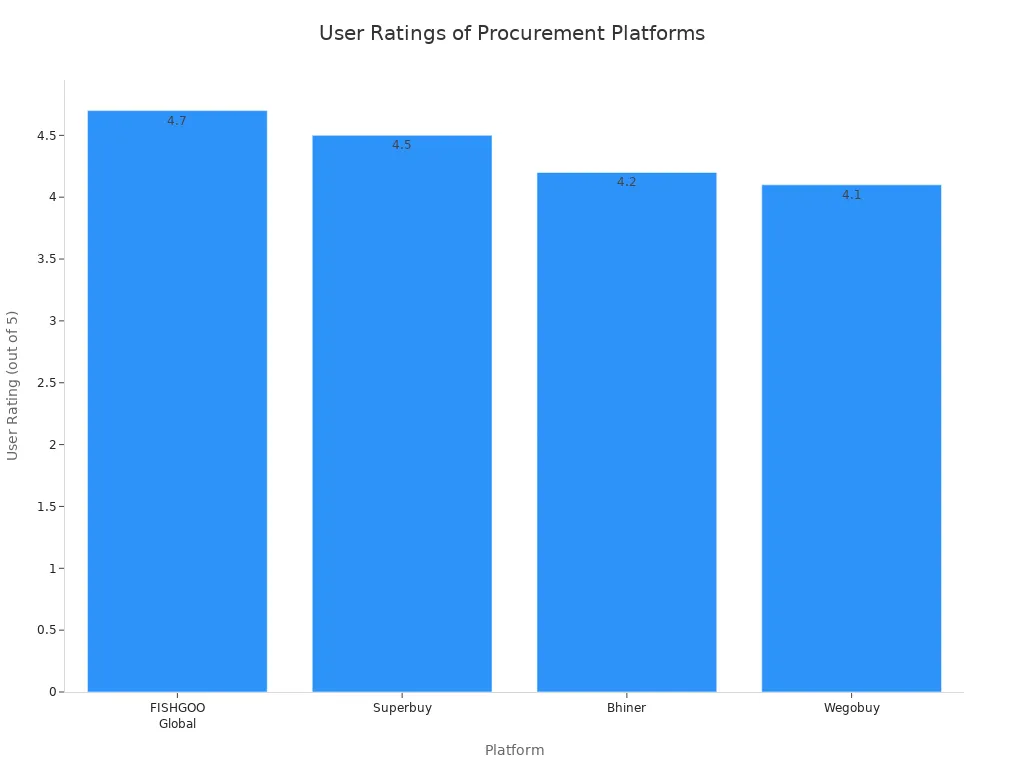
Fishgoo also gets high scores from users. Here is how it compares to other platforms:
Agent | User Rating (out of 5) | What Users Like Most |
|---|---|---|
FISHGOO Global | 4.7 | Easy shopping, fast support |
Superbuy | 4.5 | Many features, shipping |
Bhiner | 4.2 | Simple, basic service |
Wegobuy | 4.1 | Basic, reliable |
Use Data for Better Decisions
Procurement software does more than help you order. It gives you data to make smart choices. You can see what you bought before and spot trends. You can also plan your budget. This helps you avoid mistakes and spend money wisely.
With data analytics, you can:
Make choices using facts, not guesses.
Plan your budget and guess what you will need.
Find supplier risks and market changes.
Track if you meet your goals, like sustainability.
Understand every order in detail.
Most companies say they use procurement software to work faster. In a recent survey, 70% of people said they wanted to be quicker and smarter. When you use these tools, you see your whole process clearly. You can find ways to improve and save money.
Fishgoo gives you all these benefits. You get an English interface and global payment options. You can check quality and manage everything in one place. If you want custom procurement to be easy, start with the right software. Good workflow management helps you stay organized and get great results.
Prioritize Communication and Collaboration
Establish Clear Channels
You want your custom procurement to work well. Good communication helps everyone understand each other. When you set up clear ways to talk, you stop confusion. Make sure your team and suppliers know how to contact each other. Use supplier portals to get updates right away. These tools help you share news fast and follow every step.
Here are some ways to make clear channels:
Ask everyone to share ideas and worries.
Have regular meetings or video calls to talk.
Write contracts that are simple to read.
Set up feedback so both sides can talk.
A table can show the best ways to talk:
Strategy | Description |
|---|---|
Establish Clear Expectations and Shared Goals | Agree on KPIs, quality, and delivery times from the start. |
Build a Foundation of Trust and Transparency | Share data openly and set up feedback for both sides. |
Improve Communication with Technology | Use SRM platforms and reports for updates. |
Address Performance Issues Together | Make scorecards and solve problems as a team. |
Embrace Digitalization and Innovation | Try new tools and ask suppliers to do the same. |
When you use these ways, your procurement gets stronger and more steady.
Foster Ongoing Dialogue
You build trust when you keep talking to suppliers. Open talks help you find problems early and fix them fast. If there is a delay or a quality problem, sharing news quickly builds trust. You also help suppliers plan better when you share your needs and plans.
Long partnerships need more than just contracts. You need real talks and shared goals. This makes your supply chain strong and flexible. You also get new ideas and better workflow management.
Here are some good things you can get:
Better supplier work
Improved risk control
Stronger operations
More new ideas from partners
When you focus on talking and working together, your custom procurement works better and is more successful.
Negotiate for Flexibility in Custom Procurement
Secure Tailored Terms
You want your deals to fit your needs. When you start a negotiation, prepare well. Know what you want and what you can change. Good preparation helps you get better results. You should set clear goals before you talk with suppliers. This keeps you focused and helps you stay strong during talks.
Here are some smart tactics you can use:
Set your main goals and know where you can be flexible.
Build a plan for the negotiation. Write down your priorities.
Think about other options if the deal does not work out.
Use data and technology to support your points.
Focus on the total value, not just the price.
Try to build a long-term relationship with the supplier.
Tip: When you use technology and data, you can show suppliers why your requests make sense. This helps you get terms that match your needs.
Build Win-Win Agreements
You want both sides to feel good about the deal. Win-win agreements help you and your supplier work together for a long time. When you use digital tools, you can make the process smoother and more open.
Let’s look at a real example. A big company wanted better janitorial services and lower costs. They used an eProcurement system to find the best vendors. The system showed which vendors had good results in the past. During talks, they tracked performance and used data to spot ways to save money. They shared documents online and made changes in real time. Their legal team used AI to check the contract for risks. In the end, they saved 15% on costs and kept service quality high.
Here’s how you can build win-win deals:
Use digital platforms for clear and fast talks.
Share data and goals with your supplier.
Look for ways to help each other, not just yourself.
Check performance often and talk about results.
Use AI or analytics to spot risks before you sign.
When you use these procurement strategies, you make custom procurement more flexible and successful for everyone.
Monitor Quality and Supplier Performance
Set Benchmarks
You want your suppliers to meet your standards. Clear benchmarks help you check their work. Benchmarks are like scorecards for suppliers. They show what goes well and what needs fixing.
Here’s a table with common benchmarks you can use:
Metric | Description |
|---|---|
On-time delivery performance | Measures the percentage of orders delivered on time. |
Defect rate | Shows the percentage of products that are defective. |
Return material authorization rate | Tracks how often you return materials and get approval. |
Supplier relationship index | Looks at how well you and your supplier work together. |
Order accuracy | Checks if the supplier sends the right items. |
Lead time | Measures how long it takes from order to delivery. |
Communication and responsiveness | Rates how quickly suppliers answer your questions. |
Flexibility | Sees if suppliers can handle changes in your order. |
Quality of goods | Checks the overall quality of what you receive. |
Cost performance | Looks at how well the supplier controls costs. |
Tip: Choose the benchmarks that fit your business best. You may care more about delivery or quality.
Track Results
After you set benchmarks, you need to track results. This helps you find problems early and keep things running well. You can use spreadsheets or procurement software to track automatically.
Here are some important things to watch:
Defect rate: Check how many products do not meet your standards.
On-time delivery rate: See if orders arrive when you need them.
Cost variance: Compare planned spending with actual spending.
You can use a table to organize your tracking:
Metric | Description |
|---|---|
Helps you see if suppliers meet your quality, cost, and delivery goals. | |
Key Performance Indicators | Shows if suppliers follow your rules and keep improving. |
Tracking these numbers gives you a clear view of supplier performance. You can talk with suppliers about results and fix problems together. Watching these details helps you make good choices and build strong partnerships.
Review and Refine Your Tailored Procurement Process
Gather Feedback
You want your procurement process to improve over time. Start by asking your team and suppliers for their thoughts. Listen to what they say about each part of the process. Procurement software can help you collect comments and track ideas. This makes it simple to see what works and what needs to change.
Here’s an easy way to get feedback:
Share what you find with your leaders. Show them problems and what you learned.
Make suggestions based on what people tell you. Focus on changes that matter most.
Use procurement software to plan actions. Give tasks to people and set due dates.
Check in and see how things are going. If changes do not help, adjust your process.
Tip: Procurement software lets you make surveys and scorecards. These tools help you get honest feedback and check how suppliers are doing.
Implement Improvements
After you get feedback, you should make some changes. Draw out your current steps. Look for parts that are slow or cause mistakes. Procurement software can show you spending habits and how suppliers are doing.
Here are some ways to make things better:
Check contracts and vendor work. Update scorecards in your procurement software to keep track.
Look at spending patterns. Use procurement software to find hidden costs and save money.
Set KPIs in your procurement software. Watch if you reach your goals.
Here’s a table that shows how regular reviews help your business:
Benefit | Description |
|---|---|
Enhanced Efficiency and Productivity | Workflows are smoother and there are fewer mistakes. |
Cost Savings | Find ways to save money and spend less. |
Improved Supplier Relationships | Talk better and work well with suppliers. |
Increased Agility and Adaptability | Respond quickly to changes and new problems. |
Enhanced Compliance and Risk Management | Follow rules and lower risks. |
Procurement software gives you up-to-date information. You can see how long things take, track orders, and compare your results to others. When you use analytics, you make better choices and keep your process strong. Regular reviews with procurement software help you stay ready for new needs.
You can make custom procurement easy if you follow these seven tips. Build good supplier relationships and watch your progress. Use clear communication to help everyone understand. This will help you do better. Platforms like Fishgoo use smart digital tools. These tools help you save time and money.
How Technology Helps You Shop Smarter |
|---|
Makes shopping simple and keeps prices down |
Does tasks for you and tracks orders quickly |
Shows ways to save money and get better deals |
Try these ideas and see how much easier shopping gets!
FAQ
What is procurement management?
Procurement management helps you plan how to buy things. You make rules, pick suppliers, and watch your orders. This helps you get what you need on time. Good procurement management saves money and stops mistakes.
How does procurement management help with custom orders?
Procurement management lets you set clear needs for custom products. You can talk to suppliers, check quality, and follow each step. This helps you get the right items. You also avoid delays and order problems.
Can I use procurement management for small businesses?
Yes, any business can use procurement management. Small businesses get clear steps and better deals. You can track spending, compare suppliers, and make smart choices. This helps you grow and stay organized.
What is supplier lifecycle management?
Supplier lifecycle management means you track every step with suppliers. You start by finding them, then work together, and check their work. This helps you keep strong relationships and improve procurement management.
Why should I use software for procurement management?
Software makes procurement management easier for you. You can track orders, check suppliers, and see spending in one place. Many tools save time and help you avoid mistakes. You get alerts, reports, and more control over buying.
See Also
Navigating Weidian: Pros, Cons, And Tips For Global Buyers
How To Purchase Unique Designer Items On Weidian With Agents
Tips For Safe And Effective Online Shopping From China